
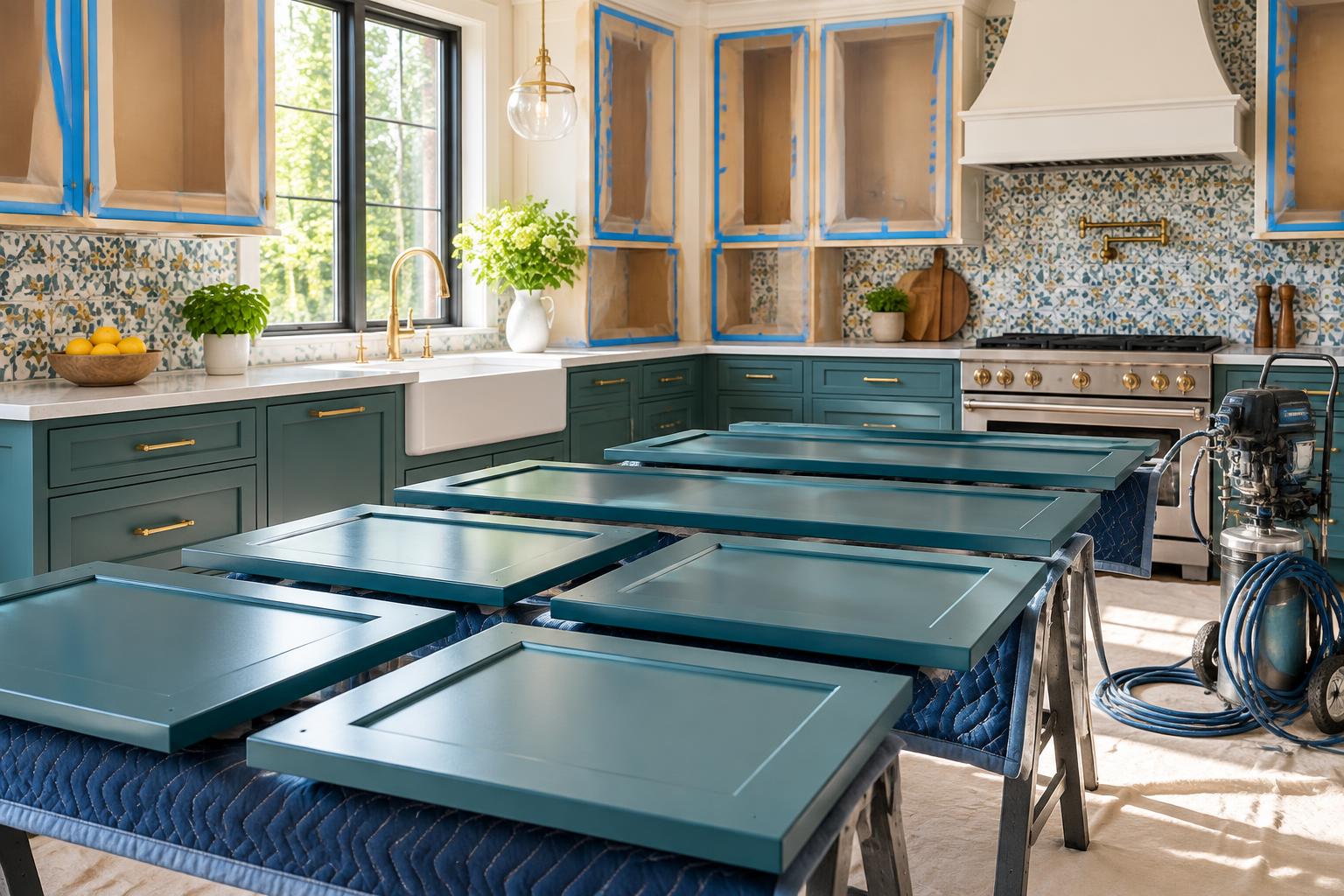
Most kitchens around Seattle built between 1985 and 2010 have solid, well-made cabinet boxes that simply look dated — honey oak, orangey maple, or builder-grade white that has yellowed. If the boxes are square, the doors close, and the layout works for you, painting is nearly always the better financial decision than replacement.
The catch is that a durable cabinet finish is a different process from painting a wall. Doors and drawer fronts come off and get labeled. Every surface is degreased (kitchens are covered in an invisible film of cooking oil), scuff-sanded, and coated with a bonding primer. Then a cabinet-grade enamel is sprayed, not brushed, for a smooth finish that cures hard enough to survive daily use.
Skip any of those steps and you get the peeling, chipping cabinet paint that gives the whole idea a bad name. Done properly, a painted kitchen holds up for many years and can be touched up if a corner ever gets dinged.
When does replacement win? If the boxes are particleboard that has swelled from water damage, if you want a different layout, or if the doors are laminate that's already delaminating. We'll tell you honestly during the walkthrough — we'd rather send you to a cabinet shop than paint something that won't last.